CONSTITUTIVE MODELING · CRYSTAL PLASTICITY · VALIDATION
Physics-based micromechanical modeling for failure prediction in advanced high-strength steels.
I develop constitutive models from first principles, implement them as Fortran user-material subroutines, and validate them against EBSD, DIC, infrared thermography, and mechanical tests. My work connects microstructural mechanisms to component-scale behavior for automotive forming, crash, and failure prediction.
PhD · 2026 Mechanical & Mechatronics Engineering
GM · sponsored industry-facing automotive research
0.001–100 s−1 validated strain-rate window
IJP · 2025 first-author journal paper
FROM THEORY TO PREDICTION
A complete constitutive-modeling workflow
I work across the full chain—derivation, implementation, experimentation, and validation—so model assumptions remain traceable to engineering decisions.
01∂
Constitutive theory
Finite-deformation kinematics, free-energy and dissipation formulations, rate- and temperature-dependent plasticity, and thermodynamically consistent damage.
02{ }
Solver implementation
Custom constitutive physics implemented as Fortran UMAT/VUMAT subroutines inside implicit and explicit commercial finite-element solvers.
03◎
Instrumented validation
Test design and bottom-up validation from microstructure and coupon response to component behavior across strain rate and temperature.
04↗
Predictive acceleration
Physics-informed datasets and DeepONet surrogates that predict formability and mechanical response without repeating every full solver run.
FEATURED RESEARCH
Crystal-plasticity damage modeling—from derivation to validation
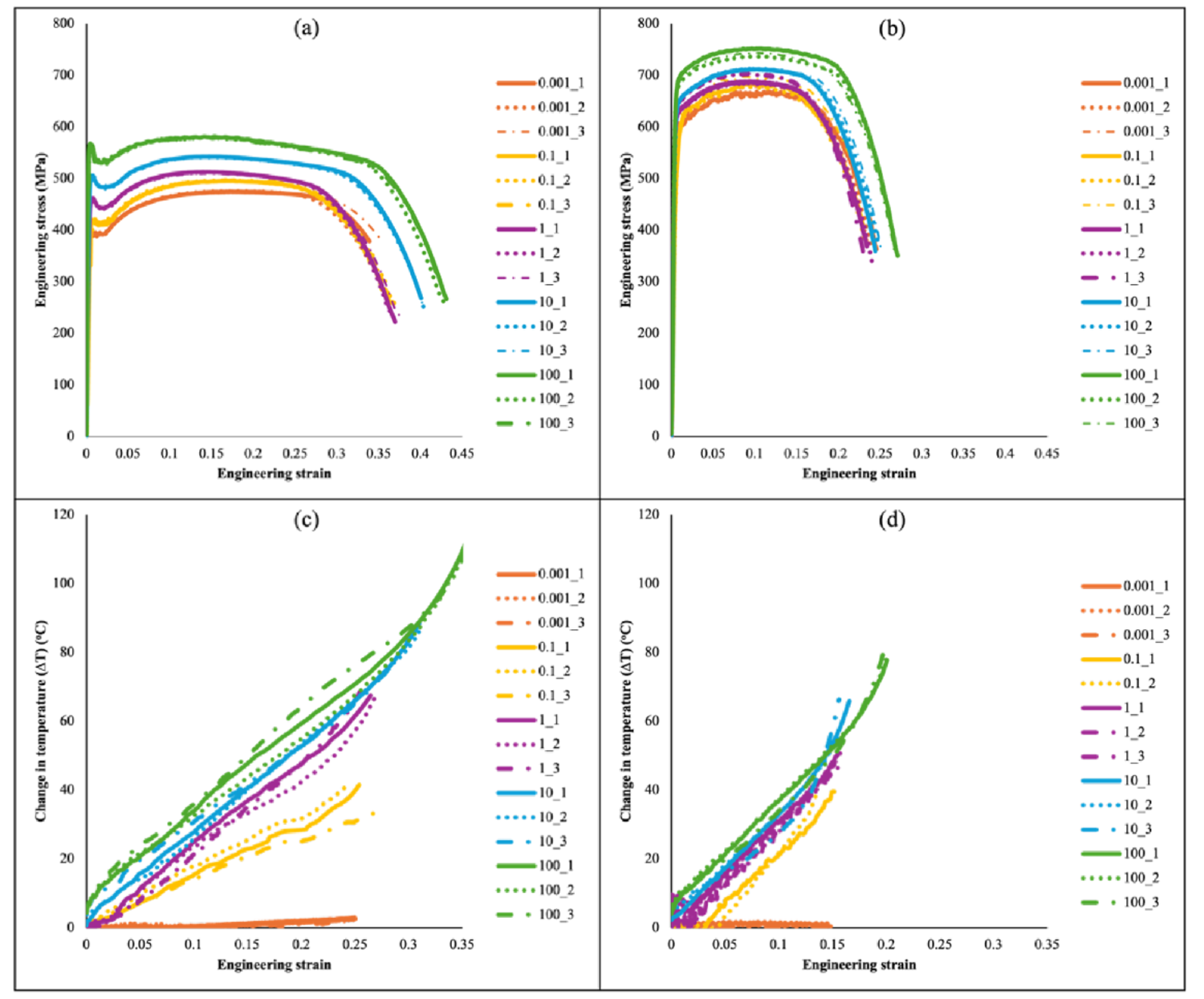
For HR340 and HR550 steels, I derived a thermodynamically consistent damage formulation, implemented it in a rate-dependent crystal-plasticity framework, and validated stress-strain response, temperature rise, texture evolution, and damage across strain rates.
Published in: International Journal of Plasticity, 186, 104255 (2025)
SELECTED PUBLICATION
Recent peer-reviewed work
Thermodynamically consistent damage evolution model coupled with rate-dependent crystal plasticity: Application to high-strength low alloy steel at various strain rates
S. Dayani, W. Muhammad, A. Brahme, F. Hekmat, T. Sabiston, K. Inal
International Journal of Plasticity, vol. 186, 104255.
LATEST
Milestones
AUG 2026 Successfully defended my PhD thesis at the University of Waterloo.
JAN 2026 Invited oral presentation at ICPDF 2026 in Geelong, Australia.
FEB 2025 First-author paper published in International Journal of Plasticity.
COLLABORATION